Soho House Clearance Health and Safety Policy
 This Health and Safety policy sets out the approach of Soho House Clearance and affiliated rubbish removal teams to protect staff, clients and contractors during all stages of site clearance and waste handling. The policy applies to every aspect of the Soho House rubbish removal operation, from initial access and assessment through transport and disposal. It is a statement of intent that prioritises safe working methods, continuous risk control and the proper management of waste to reduce harm and environmental impact.
Our objective is to deliver a safe, reliable clearance service for Soho House that meets recognised industry standards. All personnel, including temporary operatives and subcontractors, must understand their roles. Managers will ensure that competent supervision, clear instructions and adequate resources are provided to maintain a safe workplace. Staff are expected to co-operate, follow instructions and report hazards without delay.
 Risk assessment and planning are core to safe operations. Prior to each job, a documented site evaluation will identify hazards such as trip and fall risks, unstable items, sharps, asbestos risk indicators, chemical containers and traffic interaction. Control measures will be recorded and implemented, and any residual risks communicated to the team. The policy emphasises a precautionary approach: where doubt exists about the safety of an item, it will be treated as potentially hazardous until a specialist assessment can be made.
Responsibilities and Training
Training and competence are essential. All staff engaged in Soho House clearance work receive induction training covering manual handling, PPE use, safe lifting techniques and segregation of waste streams. Supervisors hold additional training in site risk management and vehicle loading. Records of training are maintained and updated to ensure continual competence.Line managers have a duty to enforce safe systems of work, including permit requirements for confined spaces or complex removals. Operatives must wear the correct PPE for the task — gloves, high-visibility clothing, steel-toe boots and respiratory protection when indicated. The organisation supports a culture where stopping work to address safety concerns is both permitted and encouraged.
 Regular toolbox talks and refresher sessions are scheduled to address seasonal issues, new processes and observed incidents. Near-miss reporting is promoted to capture learning and prevent recurrence. Where specialist tasks are identified, such as dealing with historic hazardous materials, the policy requires engagement of accredited contractors and compliance with hazardous waste regulations.
Operational Controls
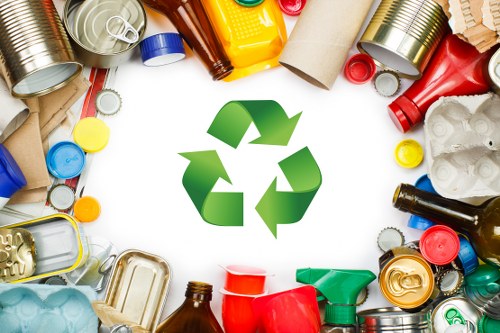
Operational controls reduce exposure to common hazards encountered during rubbish removal. These include safe segregation of recyclable and non-recyclable materials, secure stacking and load restraint for transport, and correct containerisation of liquids and chemical wastes. The clearance teams follow designated routes to minimise public interaction and apply traffic management where vehicles and pedestrians share space.Safe Work Practices
Key measures include:- Manual handling protocols with mechanical aids for heavy or awkward items;
- Sharps and contaminated materials isolated and disposed of in approved containers;
- Vehicle checks before departure, including restraints, loads and safety equipment;
- Clear labeling and segregation to support recycling and lawful disposal.
All activities are monitored to ensure compliance with operational procedures. Supervisors carry out spot checks and documented inspections to maintain standards. Any deviation triggers corrective action, and sustained non-compliance is addressed through the company disciplinary process.
Vehicle and site safety are integral to the clearance policy. Drivers are required to be licensed, rested and fit for duty. Loading and unloading are performed in well-lit, ventilated areas using banksmen and guidance where reversing or restricted views are involved. Loads are secured to prevent movement that could cause injury or accidental spillage.
Hazardous waste is treated separately from general rubbish. Items suspected of containing asbestos, chemical residues, or medical waste are identified and isolated. The policy mandates using licensed waste carriers and authorised disposal facilities for hazardous streams, ensuring chain-of-custody documentation is maintained.
 Emergency procedures include immediate first aid, spill containment and notification protocols. All sites maintain accessible first-aid equipment and at least one trained first aider on each shift. In the event of a significant incident the priority is to secure people, contain hazards and notify emergency services as appropriate. An internal investigation follows to identify root causes and implement lessons learned.
 Monitoring, review and continual improvement underpin the policy. Performance metrics include incident rates, near-misses reported, training completion and audit outcomes. Regular management review ensures the policy remains effective, and updates are made to reflect changes in operations or legislation. Health and safety documentation is retained and made available to relevant personnel.
Conclusion: This policy demonstrates a commitment to safe clearance and rubbish removal for Soho House settings through practical controls, trained staff and proactive management. It aims to protect people, property and the environment while delivering professional clearance services.
Review cycle: The policy is reviewed annually or following any significant incident, process change or legal update. Continuous improvement is achieved through staff engagement, monitoring and the application of best practice in waste and site safety management.